
Cost: $295/person
September 2026
September 24 & 25
9:00 - 1:00 pm (EST)
November 2026
November 19 & 20
9:00 - 1:00 pm (EST)
“This class exceeded my expectations. I learned new things and also got to practice some older things. I really appreciate the handouts that I was able to print and make notes on. The instructors never made me feel silly for any questions and gave clear feedback when needed. Great class!! ”
“Amanda is extremely knowledgeable and I always learn a great deal from RCA trainings ”
9 Hr. Ethical Practice: Beyond the Basics for CRPA & CARC Renewals*
Developed by Lori Drescher, CARC, RCP, RCPF, Member, MINT; Founder, RCU; and Amanda Toal, CARC, RCP, RCPF
Participants must have access to both audio and video connection. This RCU Zoom/Virtual Trainings is approved through 03/2027 by NYCB for CRPA and CARC Renewal Hours and is required for Renewal Certifications.
*RCU’s Ethics Workshops are all approved to meet the Ethics requirement for CRPA Renewal (9 of 30 hrs beginning July 2026) and CARC Renewal (3 of 18 hrs)

This Training is approved by NYCB for CRPA and CARC Renewal for the Ethics 3 or 9Hr Requirement. For details on NYCB Certification Renewal click here
“This is the best ethics training I’ve attended and I recommend this training to and for everyone.”
Course Description:
This 9-hour renewal course is designed for peer recovery professionals seeking practical, real-world guidance for navigating ethical situations in their work. The training includes a brief pre-work assignment and two interactive half-day sessions focused on application, not just theory.
Rather than approaching ethics as a review of rules, this course centers on how to apply the NYCB Code of Ethics in everyday practice, especially in complex or gray-area situations where the answers aren’t always clear. Participants will explore core ethical principles, work through common boundary challenges, and practice using a straightforward ethical decision-making model they can confidently take back into their roles.
Participants complete a 1-hour pre-work assignment to build familiarity with the Code of Ethics prior to attending two interactive live sessions. The live training emphasizes practical application through discussion, scenario-based learning, and guided reflection.
Topics will include:
Applying the NYCB Code of Ethics in real-world peer practice
The difference between ethics, values, principles, and morals
Core ethical concepts specific to the peer recovery profession
Ethical guidelines: what they are and why they matter
Staying within scope: understanding role clarity and avoiding “peer drift”
Establishing, communicating, and maintaining boundaries (including working agreement tools)
Confidentiality, privacy, and ethical information sharing
Ethical use of lived experience and self-disclosure
Harm reduction and self-determination as ethical foundations of peer work
Using a structured ethical decision-making model (including William White’s three-step process)
Applying ethics in gray areas and complex situations
“Real play” scenario practice using real-world ethical challenges
When and how to use supervision, consultation, and documentation
Navigating ethical missteps, accountability, and repair
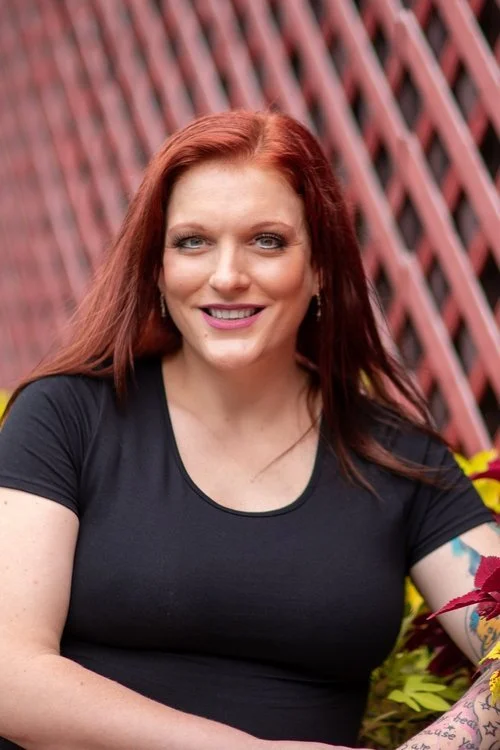
Amanda Toal, AAS, CARC, RCP, RCPF

Erin Pownall Burns, MSW, CARC, RCP, RCPF
“If people are only good because they fear punishment and hope for reward, then we are a sorry lot indeed.”